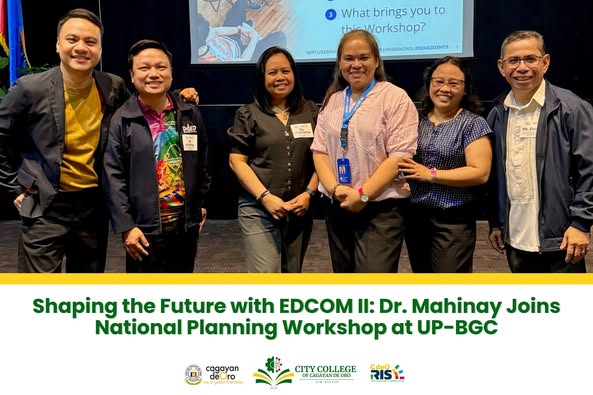
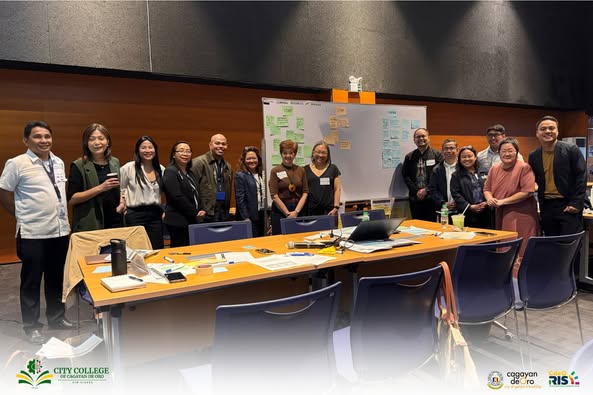
Taguig City — Dr. Ray Butch Mahinay, Vice President for Extension and Social Development Services of the City College of Cagayan de Oro, participated in the National Planning Workshop on Promoting Inclusive and Innovative Learning held on May 27, 2025, at the University of the Philippines – Bonifacio Global City (UP-BGC). The event, spearheaded by the Second Congressional Commission on Education (EDCOM II), gathered education leaders, policymakers, and advocates from across the country to shape the future of Philippine education.
The workshop forms part of EDCOM II’s bold initiative to craft a comprehensive National Education Plan, anchored on two critical components: a 10-Year Sectoral Roadmap and a Workforce Development Plan. These frameworks aim to align educational priorities with evolving labor market demands while promoting equitable access to quality education across all sectors of society. Dr. Karol Mark Yee, Executive Director of EDCOM II, delivered a powerful context-setting session. He laid out the Commission’s objectives and the urgency of systemic reforms, emphasizing the need for coherence, equity, and innovation across the education sector. His session set the tone for collaborative discourse among leaders representing various educational tiers and modalities. Dr. Mahinay, a longtime advocate of inclusive and alternative education, contributed insights drawn from his leadership in non-formal learning systems, particularly the Alternative Learning System (ALS), and his experience in integrating community-based programs in higher education. Representing both the higher education and non-formal education sectors, he emphasized the need to embed lifelong learning, digital innovations, and community partnerships into the national agenda.
“This workshop is a critical turning point,” Dr. Mahinay shared. “As we reimagine education for the next decade, we must ensure that no learner is left behind—whether they are inside the formal system or navigating alternative pathways.”
EDCOM II’s vision includes amplifying inclusivity, strengthening teacher and administrator capacity, improving learning resources, and fostering collaboration between local government units, academic institutions, and industry partners.
