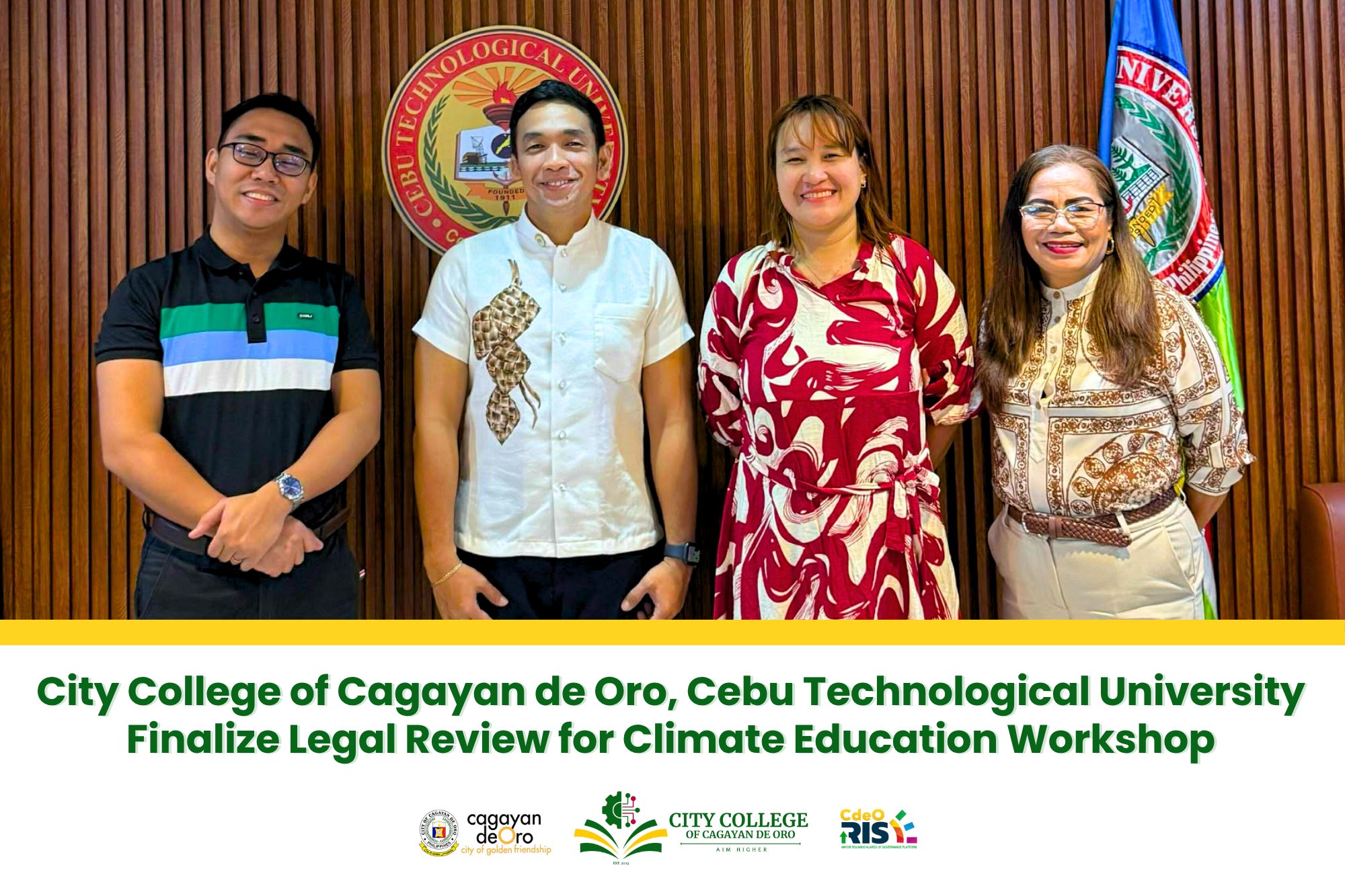
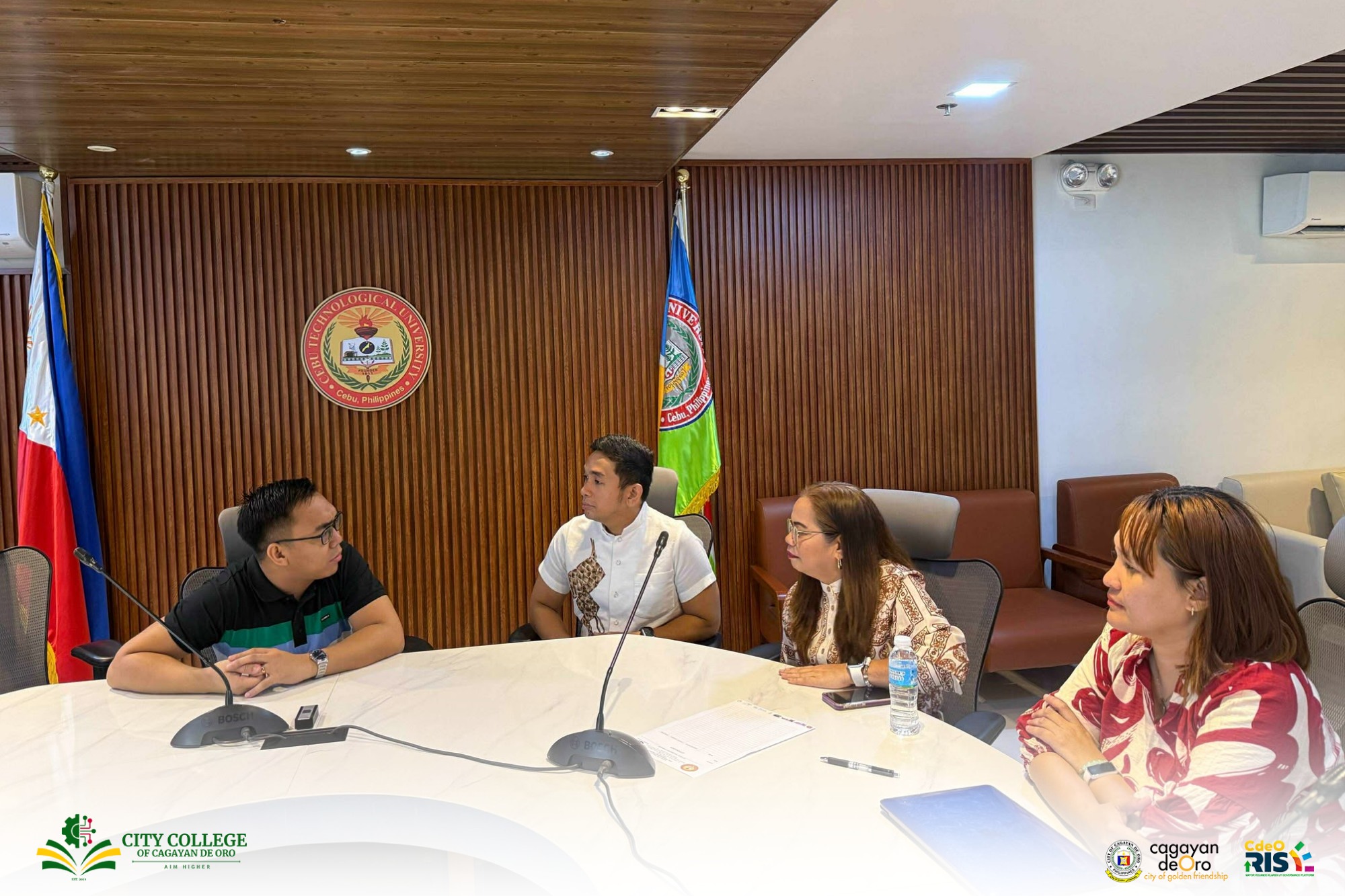
Cebu City, Philippines – City College of Cagayan de Oro (CCCDO), represented by President Dr. Jestoni P. Babia and Internationalization Director Dr. Donna Grace Cotejo, visited Cebu Technological University (CTU) Main Campus to finalize the Memorandum of Understanding (MOU) for the upcoming Asian Teacher Educators for Climate Change Education (ATECCE) Phase 2 Philippine Workshop, to be held in Cebu Technological University, Cebu, Philippines.
The meeting, hosted by CTU’s legal team led by Atty. Rodmarc Sanchez and Dr. Lynette Camello, Director for Education for Sustainable Development (ESD), focused on legal vetting and institutional alignment for the collaborative training workshop set for September 2025. The partnership shows a shared commitment to SDG 17: Partnerships for the Goals, working together with different groups to support sustainable development through education.
The MOU outlines the joint implementation of the ATECCE Phase 2 Cebu Workshop titled “Lesson Planning for Climate Action: Content, Pedagogy, and Assessment.” The initiative brings together CCCDO, Cebu Technological University, ESD Okayama Promotion Center- Okayama University (Japan), Miyagi University of Education (Japan), and UNESCO Beijing (China), combining local coordination and global expertise in climate change education. This effort is directly aligned with SDG 4: Quality Education, as it promotes inclusive, relevant, and future-ready learning strategies focused on climate resilience.
A 10-member team composed of CCCDO’s Climate Change Education advocates and IT support personnel—the same team that designed the institution’s microcredential course on Climate Change Education—will also join the Cebu workshop as both lecturers and participants. Their involvement highlights the college’s leadership in combining digital innovation with climate-responsive education. These efforts support SDG 13: Climate Action by helping teachers address environmental challenges through education.
The Japanese universities will provide funding and technical input, while the Philippine institutions will assist and lead training delivery, participant coordination, and post-implementation monitoring.
This partnership marks a significant milestone in advancing transformative education across the Asia-Pacific region through climate-responsive lesson planning and strengthened Education for Sustainable Development.
